
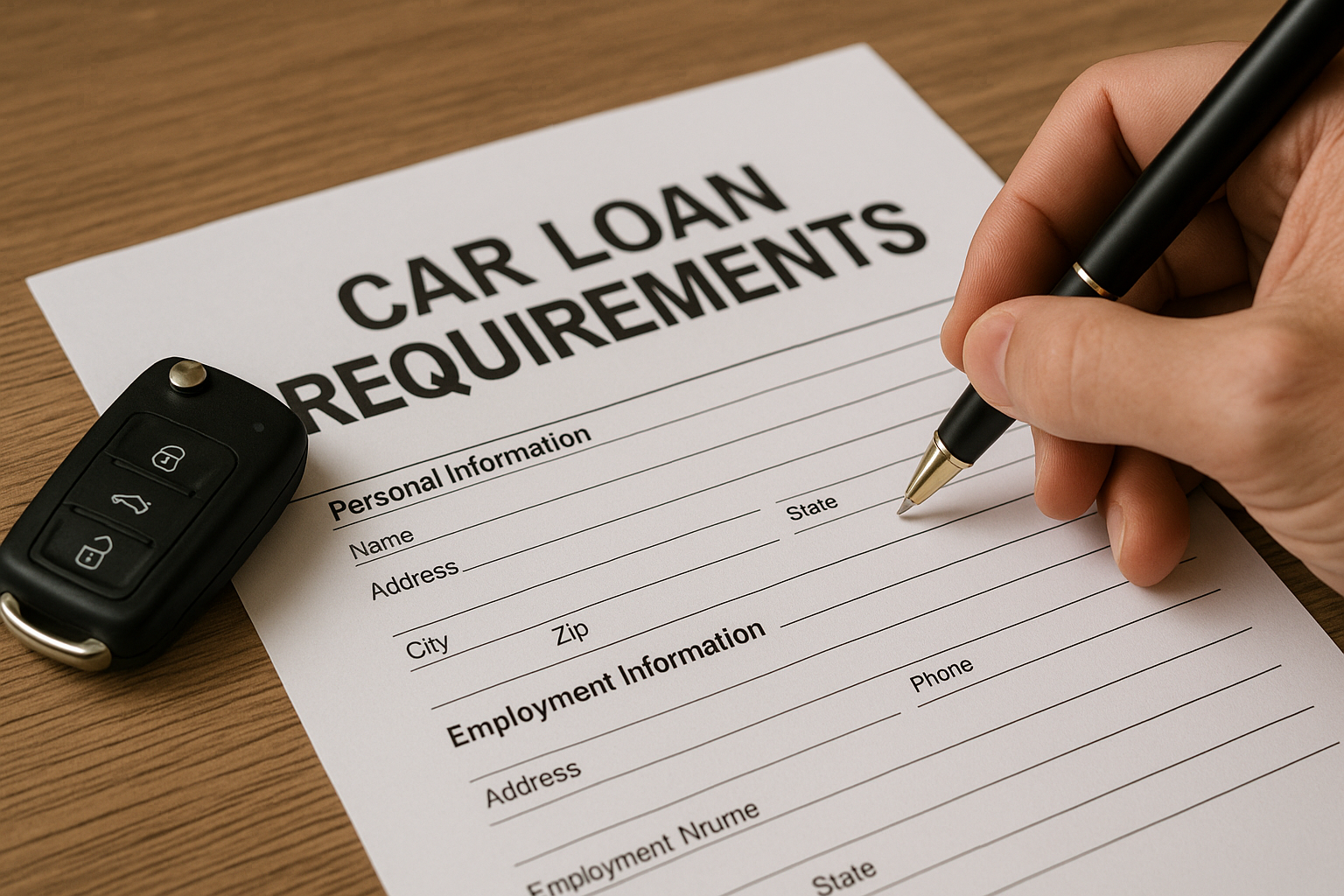
Buying a car is a major milestone — but for most Americans, it comes with the need for financing. Whether you’re eyeing a sleek new ride or a reliable used vehicle, understanding loan requirements for car purchases is key to getting approved, avoiding high interest rates, and protecting your financial health.
In this guide, we’ll break down everything lenders expect before handing you the keys. No fluff — just the facts you need to move forward confidently.
Why Understanding Car Loan Requirements Matters
Getting pre-approved or approved for a car loan isn’t just about filling out forms — it’s about meeting specific financial benchmarks. Lenders evaluate your ability to repay, credit risk, and personal documentation. Knowing these ahead of time helps you:
-
Avoid rejection
-
Secure better interest rates
-
Speed up the approval process
-
Negotiate with confidence at the dealership
Minimum Credit Score Requirements
Credit scores are one of the biggest factors lenders consider. Here’s what most lenders expect:
| Loan Type | Minimum Credit Score |
|---|---|
| Prime Loan (best rates) | 660+ |
| Subprime Loan | 580–659 |
| Deep Subprime Loan | 300–579 |
Pro Tip: A score above 700 opens doors to the best interest rates and loan terms. Below 600? You may need a cosigner or larger down payment.
Income and Employment Verification
Lenders want proof that you can afford the monthly payments. Expect to provide:
-
Pay stubs (last 2–3 months)
-
Tax returns (if self-employed)
-
Bank statements
-
Employer contact details
Most lenders prefer a minimum gross monthly income of $1,500–$2,000, though requirements vary by lender and credit score.
Required Documents
Prepare these documents before applying:
-
Valid government-issued ID (driver’s license, passport)
-
Proof of income (pay stubs, W-2s, or 1099s)
-
Proof of residence (utility bill, lease agreement)
-
Proof of insurance (or ability to obtain it)
-
Trade-in title (if applicable)
-
Social Security number (for credit check)
Having these ready can shave hours or days off your approval process.
Down Payment Expectations
While some lenders offer zero-down car loans, many require:
-
10%–20% down for new cars
-
10% or more for used cars
The more you put down, the less you’ll pay over time, and the easier it is to get approved — especially if your credit is poor.
Vehicle Requirements
Believe it or not, the car itself must qualify too.
Lenders typically prefer:
-
Less than 10 years old
-
Under 100,000 miles
-
Clean title
-
Reasonable value vs. loan amount
This ensures the car retains enough value in case they need to repossess it.
Cosigner Requirements (If Needed)
If your credit score or income is too low, a cosigner can strengthen your application. That person must:
-
Have strong credit (usually 700+)
-
Show stable income
-
Be willing to take legal responsibility if you default
This is a serious ask — and should only be made with full transparency and trust.
Debt-to-Income (DTI) Ratio
Lenders use your DTI ratio to gauge your ability to manage new debt. It’s calculated as:
(Total Monthly Debts ÷ Gross Monthly Income) × 100
Most car loan lenders want to see a DTI under 40%. If yours is higher, consider:
-
Paying off small debts
-
Increasing income
-
Applying with a cosigner
Preapproval vs. Prequalification
Both can help you shop smarter, but they aren’t the same.
| Term | Meaning |
|---|---|
| Prequalification | A soft credit check estimate of what you might qualify for |
| Preapproval | A stronger offer after a hard credit check, backed by documents |
Go for preapproval when you’re ready to buy — it shows dealers you’re serious and speeds up financing.
Common Reasons for Loan Rejection
Avoid surprises by knowing the most common reasons applicants get denied:
-
Too low credit score
-
Unstable job history
-
Insufficient income
-
High existing debt
-
Missing documents
-
Unqualified vehicle
Double-check all these before applying.
Where to Get a Car Loan
You have options — and each comes with its own pros and cons:
| Lender Type | Pros | Cons |
|---|---|---|
| Bank | Low rates, reputable | Slower approval, stricter rules |
| Credit Union | Low rates, member-friendly | Must join first |
| Online Lenders | Fast, convenient | May have higher fees |
| Dealership Financing | One-stop-shop | Often higher rates unless OEM-backed |
Tip: Always compare 2–3 loan offers before deciding.
How to Improve Your Loan Approval Odds
If you’re not quite ready, here are actionable ways to boost your chances:
-
Increase your credit score – Pay down balances and fix errors
-
Save for a bigger down payment
-
Secure a steady job history (at least 6 months)
-
Avoid new credit inquiries before applying
-
Get preapproved before visiting dealerships
Should You Refinance Your Car Loan?
Already have a car loan but want a better rate? You can refinance if:
-
Interest rates dropped
-
You want to lower your monthly payment
Just be aware of prepayment penalties and fees.
Final Thoughts: Be Smart, Not Just Approved
Meeting the loan requirements for a car isn’t just about ticking boxes — it’s about setting yourself up for long-term financial success. By preparing ahead, knowing what lenders expect, and shopping around, you can:
-
Save thousands in interest
-
Drive off in a better car
-
Reduce stress
-
Improve your credit over time