

Understanding what causes student debt is essential to addressing one of the most pressing financial challenges facing students today. Student debt often begins with a very common decision, to pursue higher education. In many countries, the cost of college or university is far from cheap.
Students or their families usually can’t cover tuition, housing, books, and daily expenses out of pocket, so they turn to student loans. But what really causes student debt to grow so large? First, rising tuition fees are a major driver. In places like the US, education costs have grown faster than inflation.
Students borrow more each year just to afford the same degrees. Even in countries with public universities, there are still living expenses that can push students toward loans.
READ MORE
Which Country is Easiest to Get a Loan?
Will Student Loans in Collections Be Forgiven?
Impact and Future of Trump Student Loans
Everything You Need to Know About Federal Student Loans
Second, many students take loans without fully understanding the terms. They may not realize how long repayment will take, or how much interest will pile up over time. Some may drop out before finishing their degree but still be on the hook for the debt.
Third, lack of financial literacy also plays a huge role. Many young people take out student loans at 18 or 19 without understanding how interest works or what repayment schedules will look like after graduation. They assume a good job will make repayment easy, but that’s not always the case.
Another big cause of student debt is limited access to grants or scholarships. In countries where these forms of financial aid are rare, student loans become the only option. Even with part-time jobs, most students can’t afford to pay for college without help.
The economy affects student debt too. In times of recession or high unemployment, graduates may struggle to find good jobs. If they earn less than expected, repaying loans becomes harder, and interest continues to build up.
Why Is Student Debt a Problem?
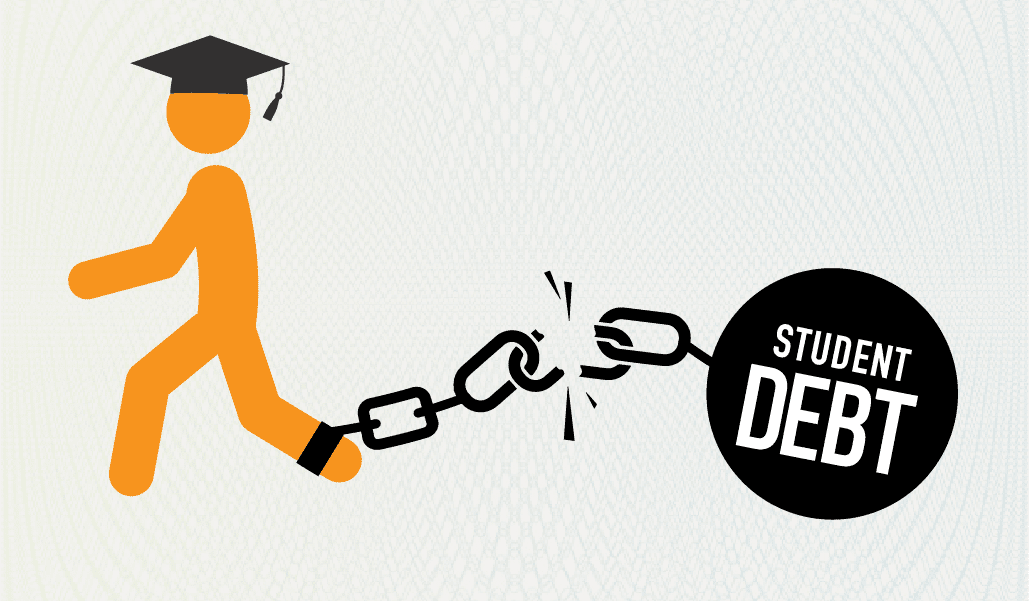
Student debt becomes a serious issue when it affects more than just the person who borrowed the money. In countries like the US, student loan debt has reached crisis levels. Many graduates are spending decades paying off their loans. Some even delay starting families, buying homes, or launching businesses because they’re tied down by monthly payments.
One of the biggest problems is that student debt often grows faster than it’s paid off. Interest builds up, especially when repayment is paused or delayed. Some borrowers find that after years of payments, their balance has hardly changed.
In some cases, student loans cannot be easily discharged through bankruptcy, especially in the US. This means the debt follows borrowers for life unless it’s fully paid. This can have a negative impact on mental health, financial stability, and future opportunities.
Student debt also affects the economy. When millions of young people are paying large portions of their income toward loans, they spend less on things like homes, cars, travel, and investment. This reduces economic activity and slows down financial growth for individuals and entire communities.
Another major concern is that some degrees don’t lead to high-paying jobs, but the cost of earning those degrees remains high. For example, someone might spend $50,000 on a degree that leads to a job earning $30,000 a year. In such cases, the return on investment is poor, and the borrower remains stuck.
Some countries have started reforming their student loan systems to reduce these issues. For instance, in Germany and the Nordic countries, many universities offer free or low-cost tuition. In Australia and the UK, income-based repayment plans have been introduced, so borrowers pay back loans only when their income reaches a certain level.
But in many places, the problem remains unsolved. Until the cost of education comes down or more support options are made available, student debt will continue to be a burden for millions around the world.
PEOPLE ALSO READ
Everything to Know About Student Loans Debt Collection
All About Student Loan Forgiveness
Student Loan Debt: Everything You Need to Know
How to Manage Loan Repayment During Financial Hardship
Final Thoughts
Student debt isn’t just a personal burden, it’s a societal issue that reflects deeper problems in how we fund and value education. From increasing tuition fees and limited financial aid to economic uncertainty and lack of financial literacy, the causes of student debt are complex and interconnected.
While some countries have made strides in reducing the impact through reforms and income-based repayment systems, many students around the world continue to face a future weighed down by financial stress.
1 thought on “What Causes Student Debt and Why It’s So Devastating”